

When women hear “menopause,” bone health is often mentioned briefly, then forgotten. But post menopause is actually one of the most important stages to focus on bones, strength, and long-term resilience.
If you’ve been diagnosed with osteopenia or osteoporosis or you’re simply thinking ahead, you might be wondering:
Does weight training really matter in post menopause?
And what role does collagen play?
The answer is yes, both matter.
In short: post menopause & bone health
-
Post menopause bone health deserves just as much attention as menopause itself
-
Hormone changes after menopause can accelerate bone loss
-
Weight training helps maintain bone strength, muscle, and balance
-
Happy Collagen supports the structural framework of bones and joints
-
A combined approach supports life after menopause, not just bone density
Post menopause explained: why bones need extra support
In post menopause, oestrogen levels remain low and stable. This affects how quickly bone is broken down and rebuilt, which is why post menopausal symptoms can include reduced strength, joint discomfort, or increased fracture risk over time.
This doesn’t mean bone loss is inevitable.
It means support needs to change.
Many women are surprised to learn that walking alone often isn’t enough for post menopause bone health. Bones respond best to load and resistance, not just movement.
Why weight training matters for osteoporosis in post menopause
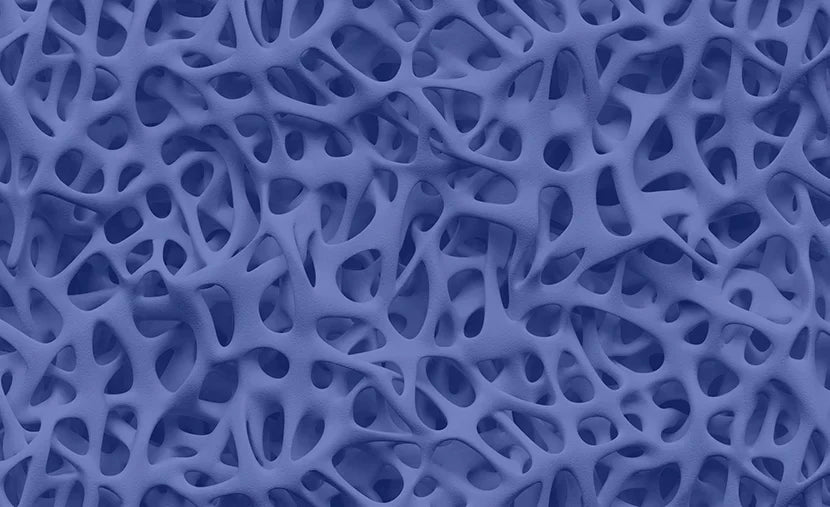
Bones adapt to stress. When muscles pull on bone during resistance exercise, it sends a signal to help maintain bone strength.
That’s why weight training (also called resistance or strength training) is considered one of the most effective forms of exercise for women in post menopause.
Benefits of weight training in post menopause:
-
Supports bone density at key sites (hips, spine)
-
Builds muscle, which supports post menopause metabolism
-
Improves balance and posture, reducing fall risk
-
Supports confidence and independence in life after menopause
For many women, strength training is as important as calcium or vitamin D, especially when bone density is already declining.
What kind of weight training helps bone health?
For post menopause bone health, the focus is usually on progressive resistance training, meaning exercises gradually become more challenging over time.
Common examples include:
-
Squats or sit-to-stands
-
Lunges or supported split squats
-
Step-ups
-
Rows, presses and carries
-
Hinge movements (e.g. deadlift patterns)
These movements load areas most affected by osteoporosis risk, when done with good technique and appropriate progression.
If you’ve been diagnosed with osteoporosis or have had fractures, exercise should be individualised and ideally guided by a physiotherapist or exercise professional.
Where Happy Collagen fits into post menopause support
Bones aren’t made of minerals alone.
They’re built on a collagen matrix, the flexible framework that gives bones structure and resilience.
As we age and particularly after menopause, natural collagen production declines, which can affect bones, joints and connective tissue.
This is where Happy Collagen plays a supportive role in post menopause bone health.
How Happy Collagen supports bones and joints
Happy Collagen provides collagen peptides that support:
-
Bone structure and integrity
-
Joint and connective tissue health
-
Muscle and tissue recovery (important when strength training)
For women doing weight training for osteoporosis or osteopenia, this matters, because bones respond best when muscles, joints and connective tissue are supported together.

Shop Happy Collagen
Support your bones from the inside out with Happy Collagen, formulated to work alongside strength training and healthy ageing.
Collagen + strength training
Weight training provides the stimulus bones need.
Collagen supports the framework those bones rely on.
That’s why many women in post menopause choose to combine:
-
Progressive resistance training
-
Adequate protein intake
-
Collagen support (like Happy Collagen)
-
Overall hormone and lifestyle support rather than relying on a single approach.
A holistic approach to post menopause bone health
The most sustainable post menopause support focuses on more than one lever:
-
Strength training (2–3 times per week)
-
Balance and posture work to reduce falls
-
Nutrition that supports muscle and bone
-
Nervous system and sleep support (important for recovery)
This approach supports not just bones but confidence, movement, and quality of life after menopause.
You’re not “too late”
One of the biggest myths about post menopause is that nothing can be done once menopause has passed.
That’s simply not true.
With the right support, many women improve strength, confidence and physical resilience well into post menopause, even with existing bone density changes.
Want support tailored to you?
At Happy Healthy You, we focus on post menopause support that looks at the whole picture, movement, nutrition, hormones and long-term wellbeing.
Learn more about Post Menopause
Because life after menopause deserves clarity, not guesswork.



Leave a comment
This site is protected by hCaptcha and the hCaptcha Privacy Policy and Terms of Service apply.