


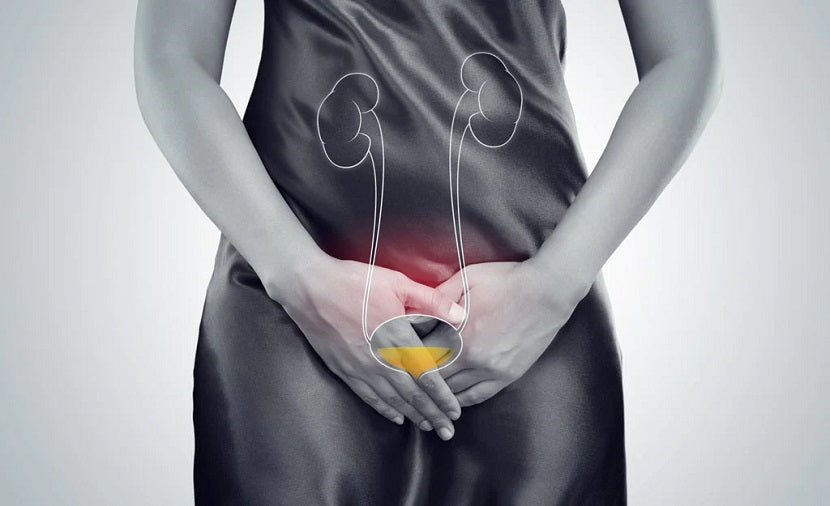
Often feel the need to rush to the loo for fear of an accident? Or are you needing the bathroom more than once at night?
Does it ever feel as though you need to plan and schedule your life around those needed loo breaks?
You’re not alone. Urinary incontinence affects as many as 1 in 4 Australians, with more than 80% being women. It is a condition that can be annoying, uncomfortable, and time consuming.
But what actually is urinary incontinence?
Urinary incontinence is the accidental loss of urine. It is more prevalent in older women and can interfere with daily activities and quality of life.
There are many different types of urinary incontinence that interfere with our life in different ways. Many people associate urinary incontinence with needing the loo frequently, when really there are many different forms this condition can take.
In this article we share what types of incontinence there are and what you can do to improve symptoms and feel more comfortable.
Types of Urinary Incontinence
What Is Stress Urinary Incontinence?
Leakage in stress incontinence occurs when the bladder muscles are not contracting and there is no urge to urinate. It is brought on by activities or movement which increases pressure inside the abdomen and the bladder. These include laughing, sneezing, coughing, jumping, or exercising. In these instances, the muscles surrounding the urethra do not squeeze tightly enough and urine leaks out of the urethra.
What Causes Stress Urinary Incontinence?
When your pelvic floor is weakened it causes stress incontinence. This is often caused by the following:
- Pregnancy and childbirth
- Age
- Obesity
- Heavy lifting
- Chronic coughing
All of these put a strain on your pelvic floor and can cause the muscles to weaken, creating stress incontinence.

What Is Urgency Incontinence?
This is when a very strong urge to urinate occurs at an unlikely or random place and time. It is when the muscles in your bladder wall contract too much. It can make you feel as though you need to rush to the loo to make it in time, which can often be inconvenient and stressful.
Urgency incontinence is thought to be brought on by a neurological cause where the brain-bladder connection triggers this sensation. Additionally, people who have neurological conditions which affect the nerves that travel from the brain to the bladder are more likely to experience urgency incontinence. It can also be caused by anxiety.
What Is Overflow Incontinence?
Overflow incontinence is the inability to control urination. It occurs when the bladder does not completely empty. It can occur when the bladder muscles become under-active and there is no proper urge to urinate. The under-activity causes the bladder to become overfilled, which results in urine leaking. Not only this, when urine is left in the bladder it can lead to urinary tract infections.
Overflow incontinence can cause unwanted leaking either in the day or at night, and can have a real impact on confidence. When it is severe, it can make people feel uncomfortable or anxious about leaving the house.
As well as bladder muscle under-activity, it is also caused by weak bladder muscles, some medications, and nerve damage from diseases like diabetes, Parkinson’s disease, and alcoholism.
What Is Mixed Incontinence?
This is when both stress and urgency incontinence are involved. A urinary tract infection can cause mixed incontinence whereby someone may experience a strong and sudden urge to urinate at an unlikely time, in addition to experiencing leakage.

Diagnosing Incontinence
If you are experiencing urinary incontinence and it is affecting your daily life, speak to your local health practitioner. When diagnosing incontinence they will take a detailed medical history. Urinalysis will also be performed to check for a UTI.
A physical examination will be necessary to explore the pelvic anatomy and assess if there are any obvious or major physical factors which may be contributing to the problem.
- You might also be asked questions such as:
- How frequently do you use the toilet each day?
- Do you get up in the night for the toilet?
- How much do you drink in a day?
- How often or urgently do you feel the need to use the loo?
- How often do you leak urine?
- What are you usually doing when you leak urine?
Keep a diary of your bathroom habits, leaking, and how much you drink to help you with these questions.

How To Manage Urinary Incontinence
There are a few different treatments for bladder control problems, urinary incontinence (UI) and overactive bladder (OAB) which can range from physical therapies to medication. Here are some of the treatments often used to improve symptoms:
Bladder Training
This behavioural therapy aims to strengthen the bladder muscles. It is when you go to the bathroom at set periods of time. Gradually you can increase the amount of time between bathroom visits.
Pelvic Muscle Exercise (Kegels)
This physical therapy is when you squeeze and relax the muscles you use to hold in and release urine. Gradually they will strengthen and will reduce unwanted leaking.
Medication
Drug medications have a drying effect in the bladder and elsewhere; additionally, they have common side effects including dry mouth, constipation, blurred vision, nausea, abdominal pain, drowsiness and memory loss.
Surgery
In more severe cases, a procedure may be necessary. This can include urethral inserts (inserted inside the urethra to help prevent leakage), or a pessary (which is inserted into the vagina to support the vaginal walls).
The Natural Alternative
Herbal approaches to bladder problems that improve the tone and tissue strength of the bladder and the surrounding area are proving to be effective – both in the short and long term.
Our daily supplement, Happy Bladder, is a combination of three herbal medicines which have clinically been shown to improve symptoms of urinary incontinence. Our supplement is natural and easy to take, and works to support healthy bladder function and bladder health, and relieve urinary frequency.
Research has also shown that Happy Bladder improves quality of life, with customers saying that they feel less frustrated, are able to be more involved in social activities, and can travel with reduced worry.
Summary
Urinary incontinence can have a significant impact on an individual's quality of life. Simple solutions are available, not to cure, but safely and effectively manage symptoms. By practising some of the exercises or trying our natural supplement, you can start to reduce symptoms and take back control.
For further help or guidance, our practitioner team can answer any questions you may have to assist you in managing any symptoms associated with urinary incontinence.

REFERENCES
Alison Bardsley, An overview of urinary incontinence, British Journal of Nursing VOL. 25, NO. 18, Published Online: 13 Oct 2016. https://doi.org/10.12968/bjon.2016.25.18.S14
Emily S Lukacz, Yahir Santiago-Lastra, Michael E Albo, Linda Brubaker, Urinary Incontinence in Women: A Review, JAMA, 2017 Oct 24;318(16):1592-1604.
https://jamanetwork.com/journals/jama/article-abstract/2658327
Yashini Govender, Iwona Gabriel, Vatche Minassian, Raina Fichorova, The Current Evidence on the Association Between the Urinary Microbiome and Urinary Incontinence in Women, Infect Microbiol, 2019 May 1;9:133.
https://doi.org/10.3389/fcimb.2019.00133

Leave a comment
This site is protected by hCaptcha and the hCaptcha Privacy Policy and Terms of Service apply.