



Happy Health You
SHOP THE APP
Access Denied
IMPORTANT! If you’re a store owner, please make sure you have Customer accounts enabled in your Store Admin, as you have customer based locks set up with EasyLockdown app. Enable Customer Accounts
Cortisol and Menopause: Why Stress Feels Worse (And How to Lower Cortisol Naturally)
By Tahlia Thomas
In Short
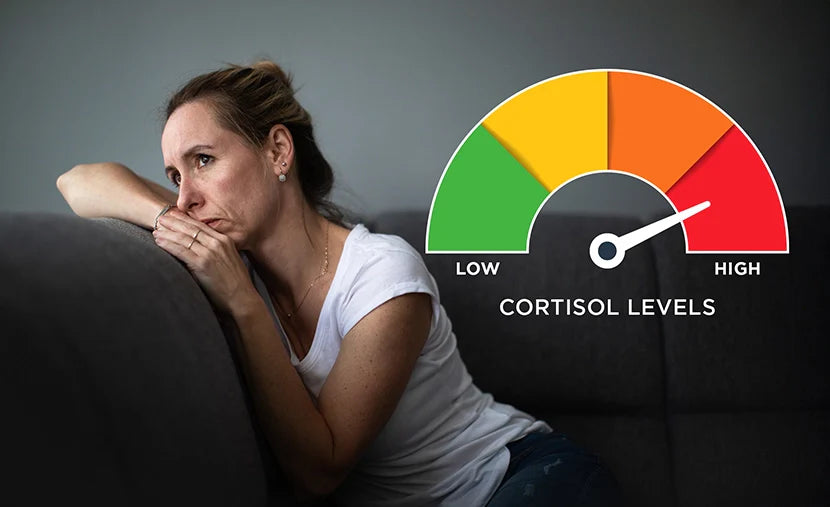
Cortisol is the body’s primary stress hormone. During perimenopause, menopause and post-menopause, hormonal changes can make women more sensitive to stress signals, causing cortisol levels to stay elevated for longer. High cortisol can impact sleep, mood, weight gain, inflammation and hormonal balance. Supporting the nervous system with lifestyle strategies and targeted nutrients can help regulate cortisol and improve overall wellbeing during menopause.
What Is Cortisol?
Cortisol is often referred to as the body’s stress hormone.
It is produced by the adrenal glands and plays an important role in regulating:
-
the stress response
-
metabolism
-
inflammation levels
-
blood sugar balance
-
the sleep-wake cycle
In healthy patterns, cortisol rises in the morning to help you wake up and gradually declines throughout the day.
However, when stress becomes chronic, cortisol levels can remain elevated for extended periods. Over time, this can impact many areas of health, particularly during hormonal transitions like perimenopause and menopause.
Why Cortisol Increases During Menopause
Many women notice that stress feels more intense during perimenopause and menopause.
This is largely due to changing levels of oestrogen and progesterone, which influence how the nervous system responds to stress.
As these hormones decline, the body can become more sensitive to stress signals, which means:
-
cortisol rises more easily
-
the body takes longer to recover from stress
-
sleep becomes more disrupted
-
anxiety and irritability can increase
Because of this, cortisol often becomes a key driver behind many menopause symptoms.
Symptoms of High Cortisol in Menopause
When cortisol remains elevated for long periods, it can affect multiple systems in the body.
Common signs of high cortisol during menopause include:
-
feeling wired but tired
-
difficulty falling asleep or waking during the night
-
increased anxiety or nervous tension
-
fatigue despite sleeping
-
weight gain around the abdomen
-
brain fog and difficulty concentrating
-
increased inflammation or joint discomfort
-
mood swings or irritability
These symptoms often overlap with hormonal changes, which is why cortisol can sometimes go unnoticed as a contributing factor.
Cortisol, Stress and Menopause Weight Gain
One of the most frustrating symptoms many women experience during menopause is stubborn weight gain, particularly around the midsection.
Elevated cortisol plays a role in this.
When cortisol levels stay high, it can:
-
increase fat storage around the abdomen
-
raise blood sugar levels
-
increase cravings for high-energy foods
-
disrupt metabolism
This is why managing stress and supporting cortisol balance can be an important part of managing menopause-related weight changes.
How to Lower Cortisol Naturally During Menopause
Reducing cortisol isn't about eliminating stress completely. Instead, it’s about supporting the systems that regulate your stress response.
Some helpful strategies include:
Prioritising Restorative Sleep
Sleep is one of the most important regulators of cortisol. Poor sleep can increase cortisol levels, while deeper sleep helps restore hormonal balance.
Gentle Daily Movement
Activities such as walking, yoga or strength training can help regulate the nervous system and improve resilience to stress.
Nervous System Regulation
Practices such as breathwork, meditation, journaling and mindfulness can help calm the body's stress response.
Supporting Key Nutrients
Certain nutrients and herbal ingredients can support the nervous system and help the body adapt to stress more effectively.
Supporting Cortisol Balance with Happy Calm
Happy Calm was formulated to support the nervous system and help the body respond to stress more effectively. It contains a combination of herbal ingredients, vitamins and minerals traditionally used to promote relaxation and emotional balance.
Key ingredients include:
- Passionflower (Passiflora incarnata)
- Traditionally used in Western herbal medicine to relieve sleeplessness, nervous tension, mild anxiety and irritability.
- Rhodiola (Rhodiola rosea)
An adaptogenic herb that helps the body adapt to physical and emotional stress while supporting mental performance.
-
Withania (Ashwagandha)
Traditionally used to help reduce symptoms of stress and support emotional wellbeing. -
Vitamin B6
Supports healthy nervous system function. -
Vitamin B5 (Calcium Pantothenate)
Supports energy production and adrenal health.
Together, these ingredients help calm nervous system overstimulation and support a balanced stress response.
The Connection Between Hormones and Stress
Hormonal balance and stress regulation are closely connected.
Products such as Happy Hormones are designed to support hormonal fluctuations that occur during perimenopause and menopause.
By supporting hormonal balance alongside nervous system regulation, women may experience improvements in mood, energy and overall wellbeing.
Cortisol plays a major role in how the body responds to stress. During perimenopause and menopause, hormonal changes can make women more sensitive to stress signals, leading to higher cortisol levels. This can impact sleep, mood, energy and weight. Supporting your nervous system, prioritising restorative sleep and using targeted nutritional support can help regulate cortisol and restore balance during this stage of life.
Reading next



Invalid password
Enter
Leave a comment
This site is protected by hCaptcha and the hCaptcha Privacy Policy and Terms of Service apply.