



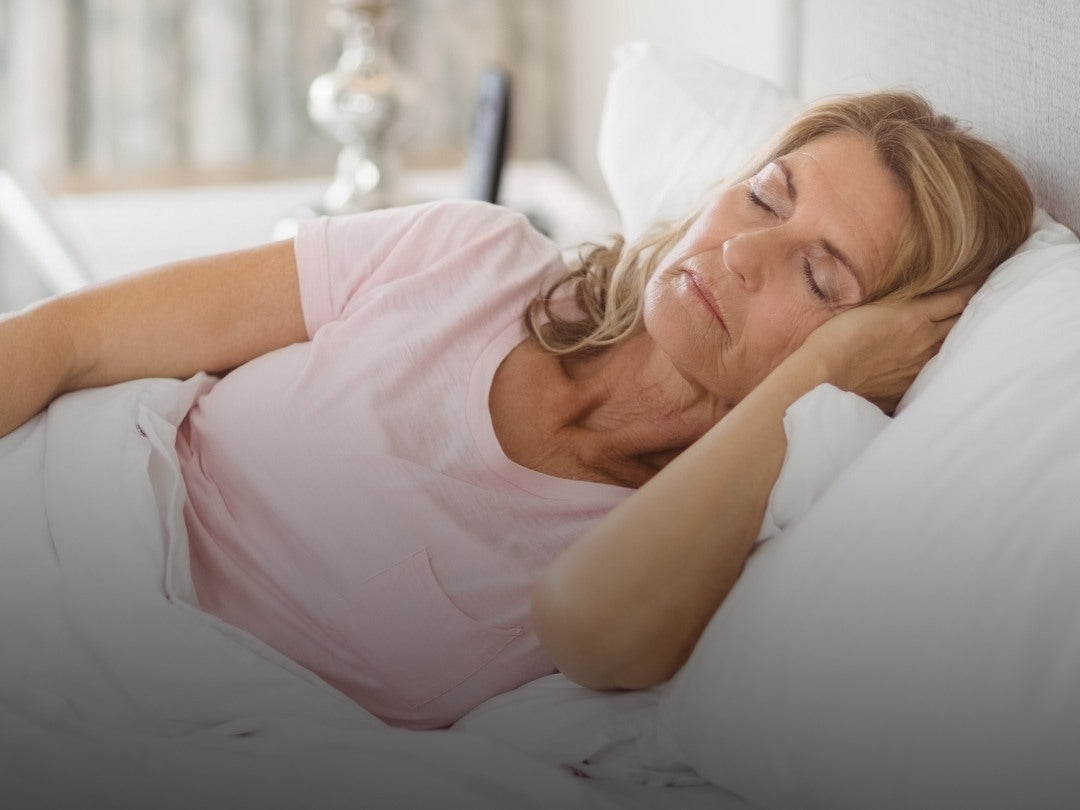
If you’ve found yourself lying awake at night, staring at the ceiling, checking the clock overand over… you’re not imagining it.
Sleep problems are one of the most common symptoms during perimenopause, menopause and post menopause.
Many women who have always slept well suddenly find themselves struggling to fall asleep, waking through the night, or feeling exhausted no matter how long they stay in bed.
And when sleep is off, everything feels harder.
Your mood is lower.
Your stress feels higher.
Your patience disappears.
Your energy crashes.
Your hormones feel completely out of control.
The frustrating part is that this change often seems to come out of nowhere. But there is a reason it happens.
Why menopause affects sleep
During perimenopause and menopause, your hormones don’t just decline, they fluctuate.
Changes in oestrogen, progesterone and cortisol can all affect the systems in the body that control sleep.
These hormonal shifts can impact:
● Your ability to relax at night
● Your body temperature
● Your stress response
● Your nervous system
● Your sleep cycles
● Your mood and anxiety levels
This is why many women feel tired all day but wired at night.
You may notice:
● Trouble falling asleep
● Waking at 2-3am
● Night sweats or feeling too hot
● A racing mind at night
● Light, broken sleep
● Waking up exhausted
This isn’t just stress or getting older. For many women, it’s hormonal.
Why sleep problems make menopause feel worse
Sleep affects almost every system in the body.
When you’re not sleeping well, it can make other menopausal symptoms feel stronger,
including:
● Anxiety
● Irritability
● Brain fog
● Low mood
● Fatigue
● Weight gain
● Low motivation
● Poor concentration
This is why improving sleep can make such a big difference to how you feel overall.
The key is supporting the body in the right way for this stage of life.
Supporting sleep during menopause naturally
Many women in our community find that sleep improves when they support their nervous
system, stress response and hormonal balance at the same time.
Two products often used together for menopausal sleep support are:
MSP (Magnesium Sleep Pain)
MSP is formulated to support:
● Muscle relaxation
● Nervous system calm
● Sleep quality
● Recovery overnight
Magnesium plays an important role in helping the body switch into rest mode, which is why
many women notice better sleep when their levels are supported.
Happy Calm
Happy Calm is designed to support:
● Stress response
● A racing mind
● Feelings of overwhelm
● Relaxation at night
When stress hormones stay high, the brain can struggle to switch off, even when you’re
exhausted. Supporting calmness can make it easier to fall asleep and stay asleep.
For many women, using both helps address the physical and mental side of sleep problems.
Sleep can improve, even during menopause
It’s very common to feel like sleep will never go back to normal once it starts changing.
But for many women, the issue isn’t permanent, it’s hormonal and nervous system related.
When the body gets the right support, sleep often improves, and with it, mood, energy and
overall wellbeing.
If sleep has been affecting your quality of life, it’s worth looking at what your body might
need during this stage.



Leave a comment
This site is protected by hCaptcha and the hCaptcha Privacy Policy and Terms of Service apply.