


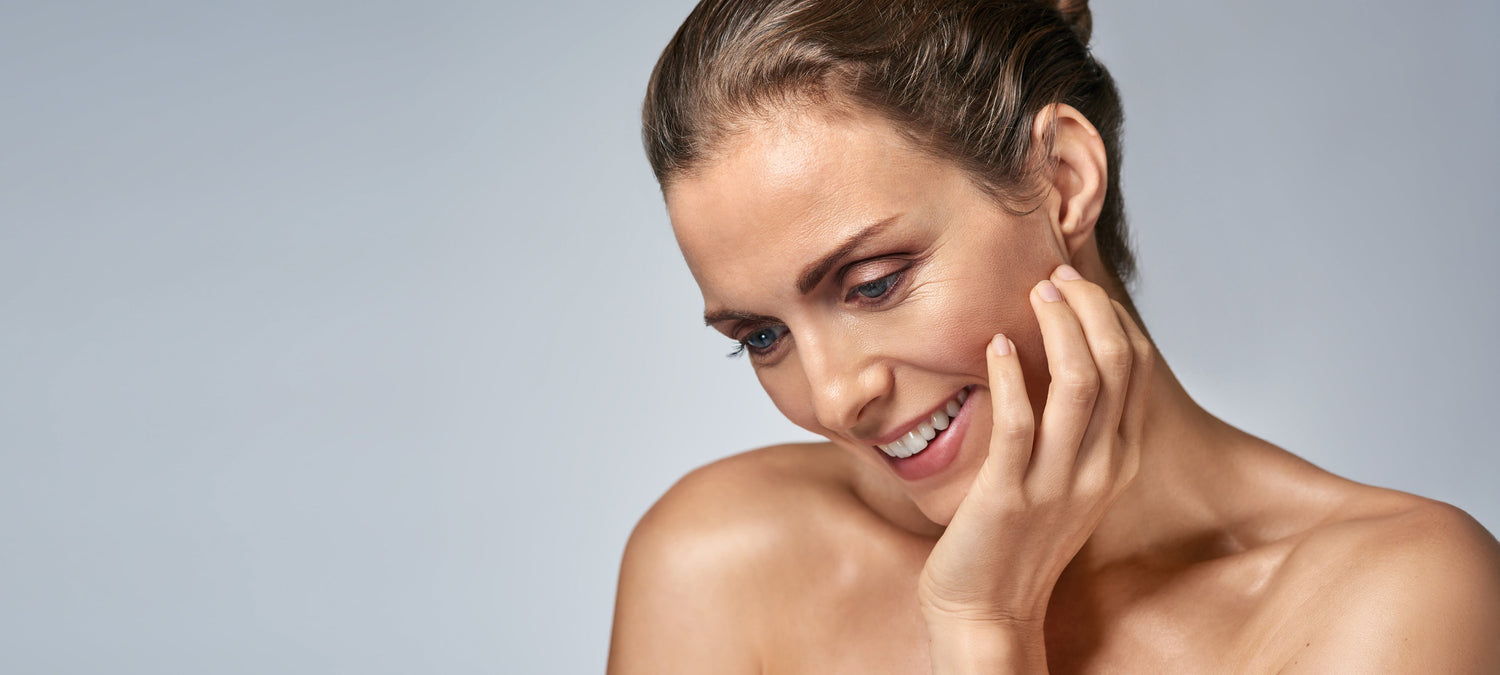
Why perimenopause affects your skin more than any product can fix — and how to support it from within.
In Short
Oestrogen is one of the most important drivers of skin health in women. As it begins to fluctuate in perimenopause, collagen production slows, oil and moisture balance shifts, and the skin's ability to repair and renew itself is compromised. Topical skincare can only do so much when the changes are hormonal. The most significant improvements come from working on the inside through collagen support, hormonal balance, gut health and reduced inflammation. Many women in the Happy Healthy You community use Happy Collagen to support their skin during perimenopause.
Why is my skin changing in perimenopause?
The serums are not working the way they used to. The moisturiser that was fine last year feels like it is barely doing anything now. Something is going on with your skin that no product on the shelf seems to address.
If that resonates, there is a reason. And it is not your skincare routine.
Oestrogen is one of the most powerful drivers of skin health in women. It stimulates collagen and elastin production, regulates the oil glands that keep skin balanced and hydrated, supports the skin's barrier function, and drives the cellular renewal process that keeps skin looking fresh and even. When oestrogen begins to fluctuate in perimenopause, every one of these functions is affected.
The changes that seem to appear quickly have often been building for months beneath the surface. By the time most women notice something has shifted, the hormonal process driving it has been underway for some time.
What skin changes are common in perimenopause?
Because the underlying cause is hormonal rather than topical, the changes women experience in perimenopause tend to feel different from ordinary skin concerns. They are deeper, more pervasive, and less responsive to the usual fixes.
The most commonly reported changes include dryness that feels structural rather than surface level, as though the skin has lost something fundamental rather than just needing more moisturiser. Hormonal breakouts returning after years of clear skin, driven by the fluctuating oestrogen to androgen ratio that perimenopause creates. Increased sensitivity and redness, as the skin barrier becomes less stable. Fine lines becoming more prominent in a short period of time, particularly around the eyes and mouth. And a general dullness or loss of glow that women describe as looking tired regardless of how much sleep they have had.
These are not signs of neglect. They are signs of hormonal change.
Why does topical skincare stop working in perimenopause?
Topical skincare works at the surface. It can hydrate, protect, soothe and temporarily improve appearance. But it cannot replace the collagen that oestrogen decline has stopped stimulating. It cannot rebalance oil production that is responding to shifting hormone levels. And it cannot address the inflammatory processes that are accelerating skin ageing from the inside.
This is not an argument against good skincare. It is an argument for understanding its limits and addressing the root cause alongside it.
Research suggests women lose around 30 percent of their skin collagen in the first five years after menopause begins. That process starts during perimenopause, before periods have even stopped. No topical product addresses collagen loss at that rate. The intervention needs to happen at the level where the loss is occurring — from within.
How do you support skin health from within during perimenopause?
The most effective inside-out approach to perimenopause skin combines several elements working together.
Collagen peptides
Hydrolysed collagen peptides are the most well-researched nutritional support for skin collagen. They provide the body with the amino acid building blocks it needs to synthesise new collagen, and clinical studies show meaningful improvements in skin elasticity, hydration and density with consistent daily use. The key is the form: hydrolysed peptides are small enough to be absorbed efficiently and directed toward collagen synthesis in a way that whole protein sources are not.
Vitamin C
Vitamin C is an essential cofactor in collagen synthesis. Without adequate vitamin C, the body cannot complete the collagen building process regardless of how much collagen is consumed. It also provides antioxidant protection against the oxidative stress that accelerates skin ageing, which rises as oestrogen declines.
Hormonal balance
Because the root cause of perimenopause skin changes is hormonal, anything that supports a more stable hormonal environment will have flow-on benefits for the skin. This includes managing cortisol, which when chronically elevated accelerates collagen breakdown, and supporting the liver's ability to process and clear used hormones efficiently.
Gut health
The gut-skin connection is well established. Gut inflammation drives skin inflammation. Poor gut barrier function allows inflammatory compounds into the bloodstream that show up in the skin as redness, sensitivity and breakouts. Supporting gut health during perimenopause — through prebiotic fibre, fermented foods and reducing inflammatory triggers — has a direct effect on skin quality.
Reducing inflammation
Chronic low-grade inflammation, which rises as oestrogen declines, actively breaks down existing collagen and accelerates the visible signs of skin ageing. An anti-inflammatory approach to nutrition — reducing refined sugar, seed oils and processed foods while increasing omega-3 rich foods, vegetables and antioxidants — protects skin from the inside in ways no topical product can replicate.
Frequently asked questions
When does perimenopause start affecting skin? For many women, skin changes begin in the early to mid forties as oestrogen starts to fluctuate. The changes can feel sudden but are typically the result of a process that has been building for some time beneath the surface.
Why am I getting hormonal breakouts in perimenopause when I never had them before? As oestrogen fluctuates in perimenopause, the balance between oestrogen and androgens shifts. Androgens stimulate the oil glands, and when they are relatively elevated, breakouts can return even in women who have had clear skin for years.
Does collagen supplementation actually work for perimenopause skin? The research on hydrolysed collagen peptides is strong and growing. Clinical studies show improvements in skin elasticity, hydration and density with consistent daily use over eight to twelve weeks. The form matters: hydrolysed peptides are significantly more bioavailable than other collagen sources.
What is Happy Collagen? Happy Collagen is a natural supplement by Happy Healthy You formulated to support women through the collagen and skin changes of perimenopause and beyond. It delivers hydrolysed collagen peptides alongside vitamin C and supporting nutrients for skin, joints and structural health.
Can I use topical skincare alongside collagen supplements? Absolutely. The two approaches work on different levels and complement each other well. Topical skincare supports the surface while internal support addresses the hormonal and structural drivers of change.
Find out the collagen support many women in our community use during perimenopause: happyhealthyyou.com.au/products/happy-collagen
For ongoing support from practitioners who specialise in women's hormonal health, join our private Facebook community, seven days a week: Happy Hormones Community


Leave a comment
This site is protected by hCaptcha and the hCaptcha Privacy Policy and Terms of Service apply.