


How perimenopause affects collagen production and what you can do to support it from within.
In Short
Oestrogen directly stimulates collagen production throughout the body. As oestrogen begins to fluctuate in perimenopause, collagen synthesis slows and breakdown accelerates. The effects show up in the skin, joints, gut lining, hair and nails. Research suggests women can lose around 30 percent of skin collagen in the first five years after menopause begins, with the steepest decline starting during perimenopause itself. Hydrolysed collagen peptides combined with vitamin C and supporting nutrients give the body the raw materials it needs to rebuild. Many women in the Happy Healthy You community use Happy Collagen to support this process during perimenopause.
What does oestrogen have to do with collagen?
Most women associate collagen loss with ageing. And while age does play a role, the more significant driver for women in their forties is hormonal.
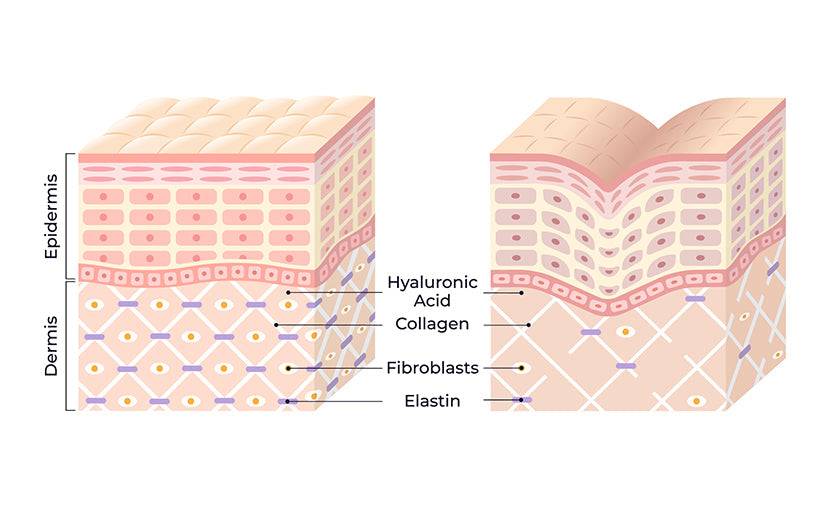
Oestrogen directly stimulates fibroblasts, the cells responsible for producing and maintaining collagen throughout the body. When oestrogen levels begin to fluctuate in perimenopause, fibroblast activity slows. Collagen is broken down faster than it is replaced. And the effects show up across the body, not just in the skin.
This is why the changes many women notice in perimenopause can feel sudden rather than gradual. It is not years of slow ageing catching up all at once. It is a hormonal shift accelerating a specific biological process.
Where does collagen loss show up during perimenopause?
Collagen is the most abundant structural protein in the human body. It provides the framework for skin, joints, bone, gut lining, hair and nails. When production declines, the effects are widespread.
In the skin
The most commonly noticed changes are loss of firmness around the jaw and cheeks, deeper lines around the eyes and mouth, increased dryness and a general loss of plumpness or glow. These changes can appear quickly because perimenopause collagen loss is not a slow trickle. Research suggests women lose around 30 percent of skin collagen in the first five years after menopause begins, with the steepest decline in the earliest years — starting during perimenopause itself, before periods have even stopped.
In the joints
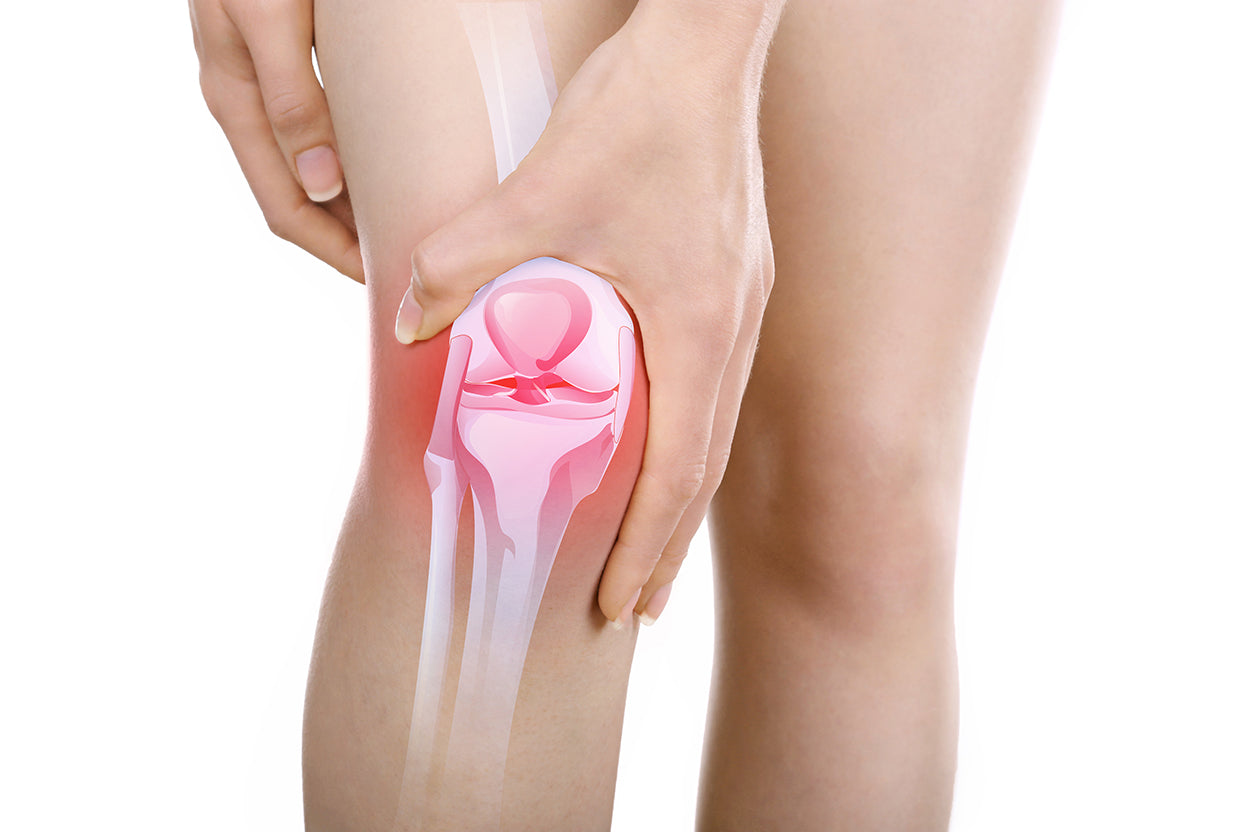
Collagen provides the cushioning within joints and the structural integrity of tendons and ligaments. When production declines, many women begin to notice stiffness, reduced flexibility and a new awareness of joints that were never previously a problem. The morning stiffness that seems to arrive out of nowhere in perimenopause is often partly a collagen story.
In the gut
Collagen is a foundational component of the intestinal lining. When collagen production slows, the integrity of the gut barrier can be compromised, contributing to increased digestive sensitivity, bloating and new food intolerances that were not present before.
In the hair and nails
Structural changes often show up as increased brittleness, slower growth and reduced thickness in both hair and nails. These changes are driven by the same decline in collagen and keratin supporting proteins that affects the skin.
Why topical skincare is not enough
Topical skincare works at the surface. It can hydrate, protect, soothe and temporarily improve appearance. But it cannot replace the collagen that oestrogen decline has stopped stimulating. It cannot rebalance oil production that is responding to shifting hormone levels. And it cannot address the processes that are accelerating collagen breakdown from the inside.
This is not an argument against good skincare. It is an argument for understanding its limits and addressing the root cause alongside it. When the driver of change is hormonal and structural, the most significant improvements come from working on the inside and letting the outside follow.
Can you rebuild collagen during perimenopause?
Yes. And this is the part of the story that tends to surprise women.
The body does not simply stop producing collagen during perimenopause. It produces less of it and the balance between production and breakdown shifts. But with the right nutritional support, that balance can be meaningfully restored.
The most well researched form of collagen supplementation is hydrolysed collagen peptides. These are collagen proteins that have been broken down into smaller chains the body can absorb efficiently and use directly in collagen synthesis. Clinical studies show improvements in skin elasticity, hydration and density with consistent daily use over eight to twelve weeks.
Vitamin C is an essential cofactor in this process. Without it, the body cannot complete collagen synthesis regardless of how much collagen is consumed. This is why combining hydrolysed collagen with adequate vitamin C is consistently more effective than collagen alone.
What else supports collagen during perimenopause?
Hormonal balance
Because the root cause of perimenopause collagen loss is hormonal, anything that supports a more stable hormonal environment will have flow-on benefits throughout the body. Managing cortisol is particularly relevant, as chronically elevated cortisol directly accelerates collagen breakdown.
Gut health
The gut and skin are closely connected. Gut inflammation drives skin inflammation. Supporting gut barrier function reduces the systemic inflammatory load that degrades existing collagen and slows new production.
Reducing the inflammatory load
Chronic low grade inflammation, which rises as oestrogen declines, actively breaks down existing collagen and accelerates visible ageing. An anti inflammatory approach to nutrition, reducing refined sugar, processed foods and seed oils while increasing omega 3 rich foods and antioxidants, protects collagen from the inside in ways no topical product can replicate.
Adequate protein
Collagen is a protein, and the body cannot build it without sufficient amino acids from the diet. Adequate total protein intake supports not just collagen synthesis but the broader tissue repair and maintenance that perimenopause demands.
Frequently asked questions
When does perimenopause start affecting collagen? For many women, collagen loss accelerates in the early to mid forties as oestrogen begins to fluctuate. The changes can feel sudden but are typically the result of a process that has been building beneath the surface for some time.
How long does collagen supplementation take to work? Most research shows meaningful changes in skin hydration, elasticity and density after eight to twelve weeks of consistent daily use. Joint and gut benefits often develop over a similar timeframe.
Is collagen just for skin? No. Collagen is a structural protein throughout the body. Supplementation supports skin, joints, gut lining, hair and nails — all of which rely on collagen as a foundational component.
Does the form of collagen matter? Yes significantly. Hydrolysed collagen peptides are considerably more bioavailable than other forms because they have been broken down into smaller chains the body can absorb and use directly. Whole collagen protein sources do not deliver the same benefit.
What is Happy Collagen? Happy Collagen is a natural supplement by Happy Healthy You formulated to support women through the collagen changes of perimenopause and beyond. It delivers hydrolysed collagen peptides alongside vitamin C and supporting nutrients for skin, joints and structural health.
Find out the collagen support many women in our community use during perimenopause: happyhealthyyou.com.au/products/happy-collagen
For ongoing support from practitioners who specialise in women's hormonal health, join our private Facebook community, seven days a week: Happy Hormones Community


Leave a comment
This site is protected by hCaptcha and the hCaptcha Privacy Policy and Terms of Service apply.