



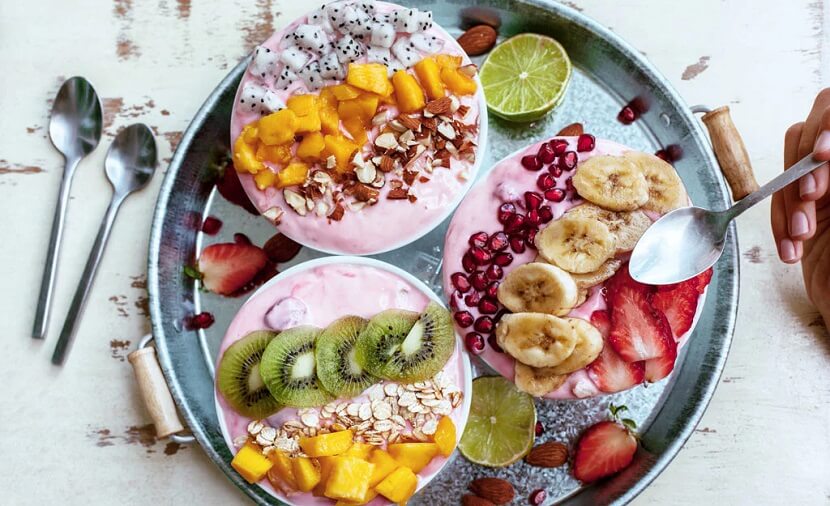
It’s not uncommon to feel as though you eat healthy food and exercise but for some reason unbeknown to you, just can't seem to lose weight. Read on if you want to understand a few of the typical reasons that women just can't seem to reduce their body fat.
5 reasons why you’re not losing weight
-
You say ‘yes’ to healthy food whenever and wherever it's presented to you.
This usually indicates that you’re neglecting innate hunger cues and in turn disregarding the important influence of portion sizes. This is easy to do when your new dietary choices feel so healthy in contrast to your past ones. Many women believe that the change alone should put them into a calorie deficit but it doesn’t always.
-
You overlook the fact that good fats still need to be consumed in moderation.
You’re clued up and have ditched the notion that ‘low-fat’ is healthy, so you make an effort to include quality fats in the diet, BUT some days this can mean half an avocado, 200g of salmon, a bag of caramelised pecans and half a tub of coconut yoghurt.
-
You don’t technically consider vegan or gluten-free sweets as indulgent because they’re labelled as ‘healthy’.
This might mean when it’s time to take a coffee break, you don’t hesitate ordering that gluten free brownie or vegan bliss ball but in fact these extras may be the clincher between falling into a calorie deficit and just maintaining your weight.
-
You make it to the gym most days but have a sedentary job and don’t move around much otherwise.
It’s not uncommon to praise ourselves for heading to the gym and in turn allow ourselves to lay stagnant on the couch or behind the desk for the rest of the day. It might feel like you deserve to rest after all your efforts but the truth is, our non-exercise energy burn that happens throughout the day (think daily steps, gardening, showering, taking the stairs, etc.) actually makes up significantly more in terms of calorie burn than your time in the gym.
-
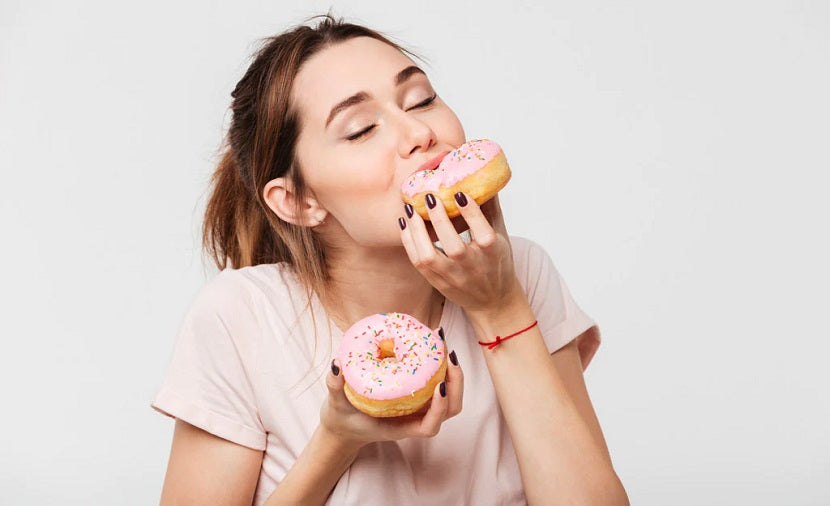
You can't shy away from a healthy after-dinner treat.
Dinner satisfies you but you're a foodie and enjoy a few evening glasses of wine or a few rows of good-quality dark chocolate. Unfortunately this alone can move you from being in a day of calorie deficit to a day in maintenance.
Whilst the habits mentioned above are not necessarily a concern for everyone. I bring them to attention for those who are struggling to achieve their personal goals despite feeling as though they're on track with their food choices.
Summary
Remember weight gain is much more than a caloric issue; various other factors play a role in how we utilise and store energy. These include thyroid dysfunction, chronic stress, poor sleep, insulin resistance, sex hormone imbalances, sluggish liver function, poor gut health and exposure to toxins and xenoestrogens.
For support and guidance, join our private Happy Weight Facebook group here or connect with one of our Naturopaths or women's health experts via the new online clinic and join thousands of other women who are on their journey to a healthier weight!

REFERENCES
von Loeffelholz C, Birkenfeld A. The Role of Non-exercise Activity Thermogenesis in Human Obesity. [Updated 2018 Apr 9]. In: Feingold KR, Anawalt B, Boyce A, et al., editors. Endotext [Internet]. South Dartmouth (MA): MDText.com, Inc.; 2000-. Available from: https://www.ncbi.nlm.nih.gov/books/NBK279077/
Warwick, Zoe & Schiffman, Susan. (1992). Role of dietary fat in calorie intake and weight gain. Neuroscience and biobehavioral reviews. 16. 585-96.
https://doi.org/10.1016/S0149-7634(05)80198-8
de Castro J. M. (1996). How can eating behavior be regulated in the complex environments of free-living humans? Neuroscience & Biobehavioral Reviews. 20, 119–131.
https://doi.org/10.1016/0149-7634(95)00047-i
Benton D, Young HA. Reducing Calorie Intake May Not Help You Lose Body Weight. Perspectives on Psychological Science. 2017;12(5):703-714.
Shelton NJ, Knott CS. Association between alcohol calorie intake and overweight and obesity in English adults. American Journal of Public Health. 2014;104(4):629-631.
https://doi.org/10.2105/ajph.2013.301643

Leave a comment
This site is protected by hCaptcha and the hCaptcha Privacy Policy and Terms of Service apply.