




Stress can be defined as many things to different people. It could be an upcoming academic exam, a pressing work deadline, a failed business deal, a tragic loss, or a series of traumatic events. Whichever way you define stress, it has the same effect on the body for all of us – physical and emotional stressors create physiological and biochemical changes.
Stress is a common malady for modern-day women who often need to work full time, run a household, manage children and everything else that comes with our fast-paced society. Stress is a natural mechanism designed for short periods. With continued stress, however, thyroid function can weaken as the body attempts to balance the effects of adrenaline and cortisol. As a result, long-term stress can lead to adrenal exhaustion.
What are the Types of Stress?
- Emotional stress - anger, depression, fear, frustration, sadness or bereavement, remembering past trauma
- Mental stress - work deadlines, an increase in working hours or workload, feelings of responsibility, the gravity of commitments or discipline, anticipatory anxiety and high ideals, drive and perfectionism
- Chemical stress - caused by environmental pollution and toxic chemicals
- Nutritional stress - deficiencies in vital nutrients to sustain life and over-consumption of unhealthy foods, food allergies, addictions and eating disorders
- Physical stress - demands placed on the body due to long work hours, inadequate sleep and rest, exercise, hard labour and birthing
- Psycho-spiritual stress - relationship pressure, financial issues, career pressure, frustrations in reaching life goals and spiritual enlightenment
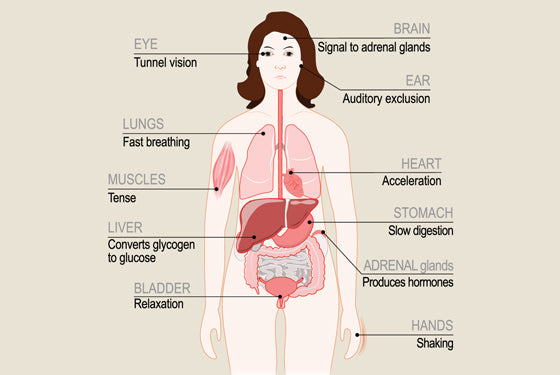
Stressors initiate chemical responses between the brain (limbic system) and the nervous system. These messages stimulate the autonomic nervous system to respond either via emotional expression or survival mechanisms (fight or flight). Increased stress hormones produced in the adrenals (cortisol and adrenalin) cause a reaction in the parasympathetic nervous system (PSNS) and the sympathetic nervous system (SNS). While we may experience the same situation as another, we deal with it in our own unique way. However, when someone experiences a stressor of any origin and interprets it as negative, the body reacts in the same specific manner. This is called the "fight or flight" response or the General Adaptation Syndrome (GAS).

What Are The 3 Stages of Stress? (General Adaption Syndrome)
-
Alarm Reaction. The first response is a release of adrenaline, norepinephrine and cortisol from the adrenal glands. This gets the blood moving straight to the skeletal muscles in preparation for either a fight or an evasion. The pupils of the eyes dilate and the mind becomes more alert. Prolonged stimulation of the alarm (fight and flight) phase causes the following flow of changes:
Initial stress stimulation → hypothalamus stimulation → nerve stimulation → sympathetic nervous system response → adrenal medulla → adrenaline production
-
Resistance. When the crisis is over, the adrenal levels go back to normal due to mechanisms called negative feedback. However, if stress triggers become continuous then cortisol receptors gradually become less sensitive to these negative signals and fail to shut down. The body then becomes exhausted from the imbalance. Headaches, insomnia, hypertension and cardiovascular diseases start to rear their ugly head. All the blood that is going to the skeletal muscles means that other areas of the body are getting neglected such as the digestive system, immune system and sex drive. Long-term stimulation of the resistant phase of stress creates this flow of changes:
Prolonged stimulation → hypothalamus stimulation→ pituitary (ACTH, STH, glucocorticoids, mineralocorticoids, TSH, thyroid, thyroxine)
-
Exhaustion. Dealing with stress for extended periods can take its toll on you physically, mentally, and emotionally. The body reaches a stage where it doesn’t have the strength and energy to combat stress and you experience symptoms like extreme fatigue, anxiety, depression, or burnout. When your tolerance for stress is significantly reduced, you have a weakened immune system which puts you at more risk for stress-related issues and diseases. Continual exhaustion of the nervous system due to chronic stress increases stress hormone production and creates these changes:
Excessive stimulation → chronic nutrient depletion → adrenocortical hormones decreased and chronic adrenal fatigue
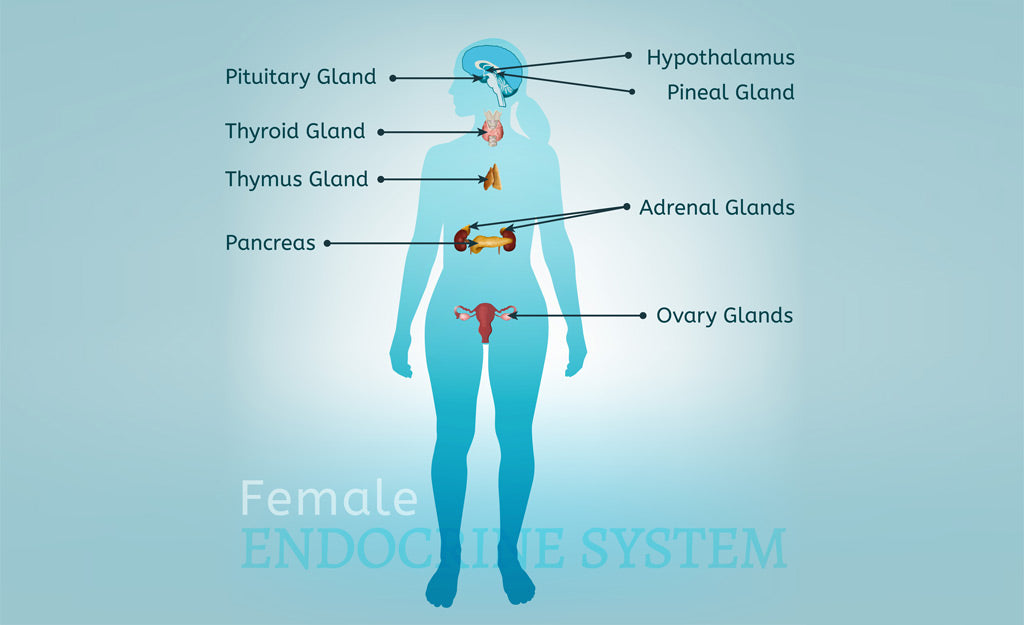
During the alarm reaction, resistance or exhaustion phases of the stress response, the impact on the Hypothalamus-Pituitary-Adrenal Axis feedback loop to the ovaries can be sufficient enough to disrupt the hormonal balance and consequently, the functioning of the reproductive organs. Understanding the intricate relationship between these feedback systems shows that high stress causes the hypothalamus (GnRH secretion) to stop secreting the stimulus for ovulation (LH and FSH) in its usual pulsatile manner. A confused and dysregulated hormonal system is created and irregularities to the cycle are initiated.
Stress & illness
Common illness patterns resulting from prolonged exposure to stress include:
- A reduction of thyroid function leading to slower metabolism and weight gain
- Acute or chronic menstrual cycle alterations. A once well-functioning monthly cycle can turn problematic for some women. PMS, erratic cycles, perimenopause or increased pain can be caused by underlying stress.
- Immune system depletion
- Chronic fatigue
- Nutrient deficiencies
- Cardiovascular conditions (heart palpitations, increased or decreased blood pressure)
- Nervous system problems (anxiety, sensitivity, irritability, nervousness)
Don’t let stress take over your health and vitality. Book in now for a one-on-one consultation with any of our holistic health practitioners. The HHY team will specifically design a treatment plan for your health concerns and incorporate stress management skills, dietary and lifestyle changes, along with herbal or nutritional supplementation when needed.

REFERENCES
Morey, J. N., Boggero, I. A., Scott, A. B., & Segerstrom, S. C. (2015). Current Directions in Stress and Human Immune Function. Current opinion in psychology, 5, 13–17.
https://www.ncbi.nlm.nih.gov/pmc/articles/PMC4465119/
Ranabir, S., & Reetu, K. (2011). Stress and hormones. Indian journal of endocrinology and metabolism, 15(1), 18–22.
https://www.ncbi.nlm.nih.gov/pmc/articles/PMC3079864/
Schneiderman, N., Ironson, G., & Siegel, S. D. (2005). Stress and health: psychological, behavioral, and biological determinants. Annual review of clinical psychology, 1, 607–628.
https://www.ncbi.nlm.nih.gov/pmc/articles/PMC2568977/
Scott, K. A., Melhorn, S. J., & Sakai, R. R. (2012). Effects of Chronic Social Stress on Obesity. Current obesity reports, 1(1), 16–25.
https://www.ncbi.nlm.nih.gov/pmc/articles/PMC3428710/
Segerstrom, S. C., & Miller, G. E. (2004). Psychological stress and the human immune system: a meta-analytic study of 30 years of inquiry. Psychological bulletin, 130(4), 601–630. https://www.ncbi.nlm.nih.gov/pmc/articles/PMC1361287/
Yaribeygi, H., Panahi, Y., Sahraei, H., Johnston, T. P., & Sahebkar, A. (2017). The impact of stress on body function: A review. EXCLI journal, 16, 1057–1072.
https://www.ncbi.nlm.nih.gov/pmc/articles/PMC5579396/


Leave a comment
This site is protected by hCaptcha and the hCaptcha Privacy Policy and Terms of Service apply.